Supporting Small Businesses Amid SB 56 Policy Changes and Four More Things You Need to Know
Ohio Senate Bill 56 (SB 56) takes effect March 20, 2026 and changes how intoxicating hemp and THC-related products may be sold. This law revises Ohio’s marijuana and hemp regulations and moves many THC products into the state’s regulated cannabis system.
Ohio SB 56 represents a significant regulatory shift that will have very real impacts on parts of Yellow Springs’ small business community. While the focus right now is on compliance deadlines and operational changes, what must also be acknowledged is the human impact behind these transitions.
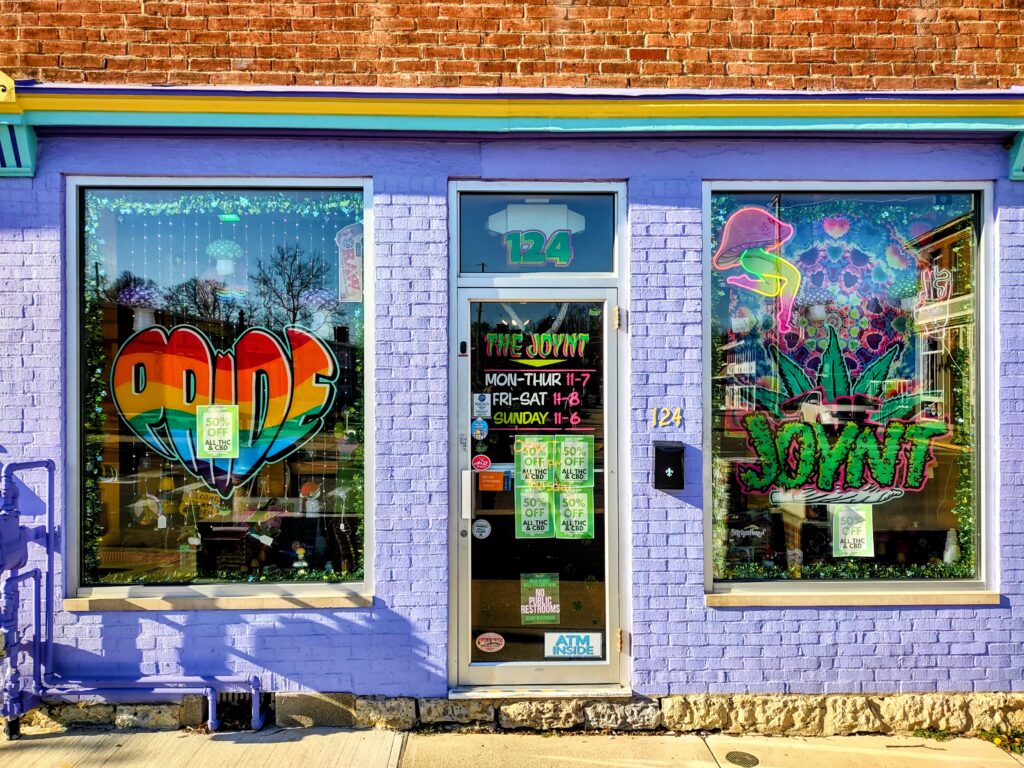
Some of our local businesses now face the difficult reality of pivoting their business models, redesigning retail spaces, or in some cases making the painful decision to close, relocate, or change direction entirely. For employees, this may mean uncertainty. For owners, it means reworking plans built through years of investment, risk, and belief in our community.
For clarity: this disruption is not a reflection of the strength of our local economy or the vitality of our business district. Yellow Springs continues to be a strong and resilient small business community. However, when regulatory changes force rapid shifts, the effects extend beyond economics. They impact the culture, the character, and the sense of place that makes communities like ours special.
These are not just businesses.
They are our neighbors.
They are our friends.
They are part of the culture that defines Yellow Springs.
The Yellow Springs Chamber of Commerce remains committed to helping businesses and their employees navigate this transition. We will continue working to identify resources, make strategic connections, and support the adaptability that has always defined our local entrepreneurs.
At the same time, moments like this remind us of an important truth: small businesses should always be part of the conversation when policies with economic impact are considered. Entrepreneurs are not just economic drivers; they are community builders. Their success shapes not just our tax base, but our identity.
Small businesses are not just the backbone of our local economy, but they are also the heartbeat of our community life. When they face disruption, the community feels it too.
As we move forward, our focus remains where it has always been; supporting our businesses, supporting our workforce, and supporting the community that connects them both.
Because this is not just about regulation.
This is about resilience.
This is about people.
This is about community.
The Changes
Key Hemp Regulations Under SB 56
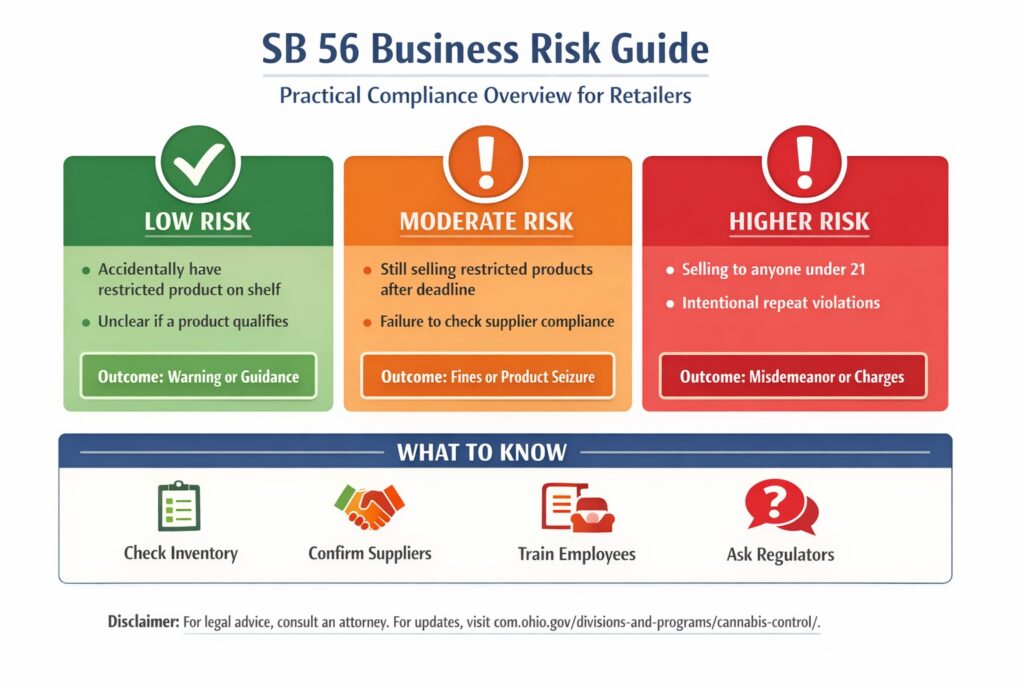
- THC Limits: Prohibits the sale of hemp-based items containing more than 0.4 milligrams of total THC per container outside of licensed marijuana dispensaries.
- Retail Restrictions: Intoxicating hemp products (such as Delta-8 gummies and vapes) can no longer be sold at unlicensed locations like gas stations, smoke shops, or grocery stores.
- THC Beverage Ban: A complete ban on hemp-derived THC beverages in bars, restaurants, and breweries. While the legislature initially included a transition period for these drinks, Governor Mike DeWine used a line-item veto to strike it, making them illegal immediately upon the bill’s effective date.
- Synthetic Cannabinoids: Explicitly bans products containing synthetic substances like Delta-8 THC, Delta-10, or HHC.
- Enforcement: Grants law enforcement the authority to remove non-compliant products from unlicensed retail shelves starting March 20.
SB 56 also modifies the adult-use marijuana laws previously approved by voters:
- Potency Caps: Reduces the maximum THC level in adult-use extracts from 90% to 70% and caps flower at 35%.
- Public Use: Prohibits smoking or vaping marijuana in most public places, restricting use primarily to private residences.
- Storage & Transport: Requires marijuana to be stored in its original packaging and kept in the vehicle’s trunk while driving.
- Out-of-State Purchase: Criminalizes bringing legally purchased marijuana from other states (e.g., Michigan) into Ohio.
Disclaimer: This information is provided for general awareness and does not constitute legal advice. For questions regarding legal requirements, compliance, or enforcement related to Ohio SB 56, businesses and individuals should consult a qualified attorney. For the most current regulatory updates and official guidance, please visit the Ohio Division of Cannabis Control (DCC) website.
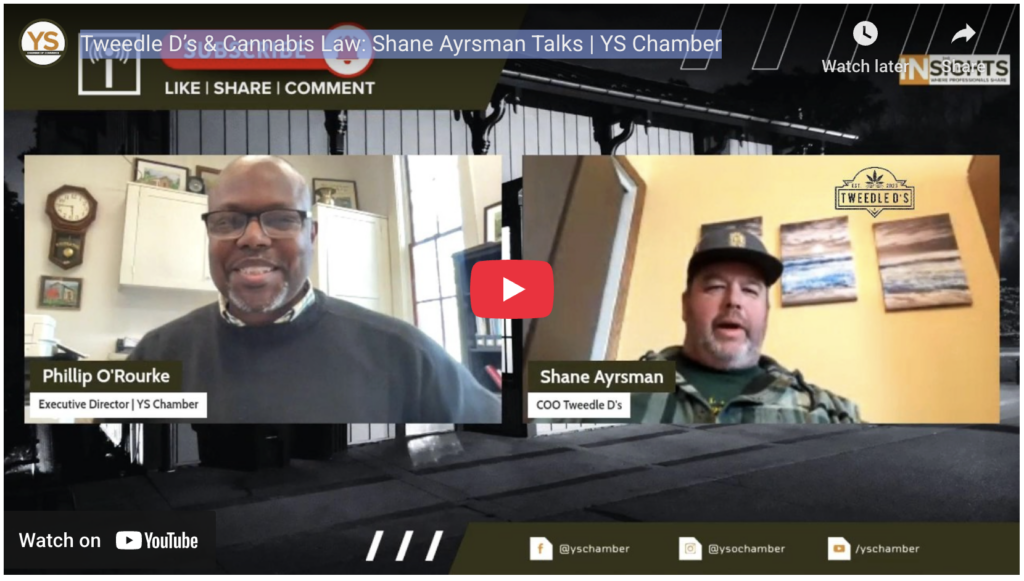
Chamber Insights Interview
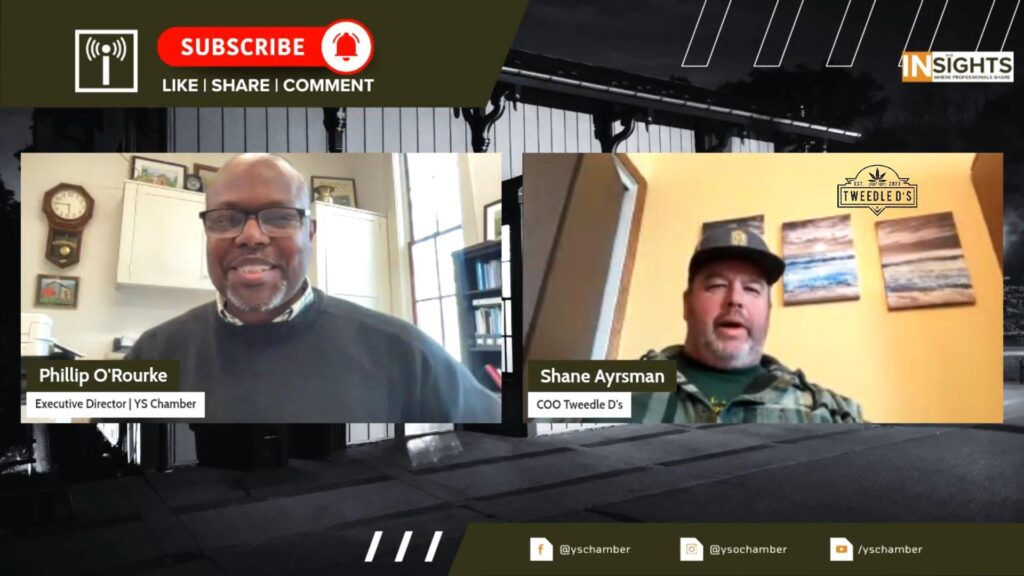
Shane Ayrsman of Tweedle D’s in Yellow Springs sat down with Executive Director Phillip O’Rourke for a candid conversation about cannabis, regulation, and the evolving landscape facing small retail businesses.
WATCH NOW